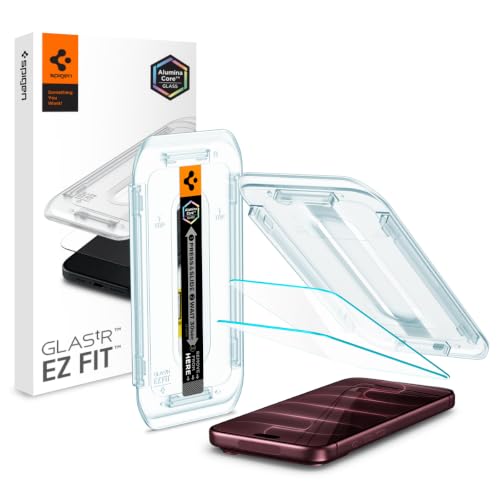
Spigen
Spigen tempered glass
Tempered glass
- 2 pack
- Fitting frame
Every screen protector worth buying in the UK, in one place. Phones, tablets, laptops and car displays — filtered by your exact model, fitted advice included, shipped by Amazon.
Two jobs, two products. A protector takes the scratches; a case absorbs the drop.
Six categories, one rule: nothing universal. Everything here is cut for a named model.
Tempered glass, privacy and matte film for every current UK handset, cut to the exact model, not a universal sheet.
61 models →Glass, paper-feel and anti-glare for iPad, Galaxy Tab, Fire and Surface, including stylus-friendly textures.
17 models →Privacy filters and anti-glare film for MacBook, XPS, ThinkPad and Surface — the commuter and open-plan office essentials.
9 models →Anti-glare and matte protection for Tesla, Polestar, BYD, Kia and VW centre displays. The fastest-growing category in the UK.
19 models →Full-cover cases and thin film for Apple Watch, Galaxy Watch and Garmin, where door frames do the damage.
11 models →Steam Deck, Switch and ROG Ally protection — anti-glare and a good oleophobic coating matter far more here than any hardness rating.
7 models →The most-searched phone in this category right now.


Listing states it does not fit iPhone 18 Pro Max
The most-searched tablet in this category right now.

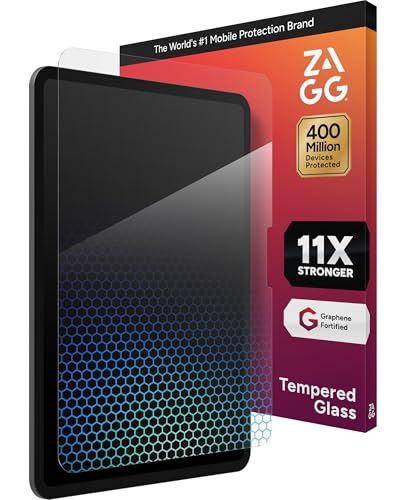


Listing states it does not fit ipad pro 11 (2018-2022 version)

The most-searched car screen in this category right now.


Listing states it does not fit Tesla Model 3 Highland 2024


Where UK buyers are actually looking this month.
Apple · 6.9"
Shop protectors →Apple · 6.3"
Shop protectors →Apple · 6.9"
Shop protectors →Apple · 6.3"
Shop protectors →Apple · 6.3"
Shop protectors →Apple · 6.9"
Shop protectors →Nintendo · 7.9"
Shop protectors →Samsung
Shop protectors →Apple · 6.3"
Shop protectors →Samsung · 6.9"
Shop protectors →Tesla · 15.4"
Shop protectors →Apple · 6.1"
Shop protectors →The finish matters more than the brand. Start here if you know what you want.
The default choice. Rigid, glass-clear, absorbs impact by sacrificing itself.
See options →A micro-louvre layer narrows the viewing angle so only the person in front sees the screen.
See options →An etched surface scatters reflections and hides fingerprints.
See options →Textured film that gives a stylus resistance, for drawing and handwriting.
See options →Thin flexible film that wraps around curves where glass can't sit flat.
See options →Glass bonded edge-to-edge with a UV-cured adhesive, for heavily curved screens.
See options →Launches, materials and recalls, updated automatically.
Samsung’s latest F-series smartphone is now official in India with the launch of the Galaxy F70. This is the third entry in the F70 series, following the Galaxy F70e from February and the Galaxy F70 Pro, which launched in August. The new Galaxy F70 is the…
Samsung launched the Galaxy F70e back in February and the Galaxy F70 Pro in August, and the vanilla Galaxy F70 showed up in Google's database last week. Today, Flipkart has put up a microsite for the Galaxy F70 5G, revealing that it will launch in India on…
Straight answers, no padding.
Almost certainly, and you should still buy the listing that says so. Apple gives the iPhone 18 Pro identical body dimensions to the 17 Pro, and several manufacturers now sell a single protector fitted to both — that manufacturer claim is worth more than the measurements.
If your phone is under two years old or you carry it in a pocket with keys, yes — a £10 protector is cheap against a £150+ screen repair. Modern phone glass resists scratches well but still chips on impact.
Glass for impact protection and a screen-like feel; film for curved and folding displays where glass can't sit flat. Glass is the right default for the large majority of flat-screen phones and tablets.
9H refers to the Mohs-adjacent pencil hardness scale, where 9H is the hardest graphite pencil that won't scratch the surface. It's a marketing figure — nearly every tempered-glass protector claims it, and it says nothing about impact resistance.
Fit it in a steamy bathroom after the shower to settle dust, clean with the alcohol wipe then the dry cloth, lift dust with the sticker, align with the frame, and drop it from the middle so the adhesive rolls outwards.
Lift the affected corner with a strip of sticky tape, use a second piece of tape to lift the particle off the display, then lower the protector back down. Don't slide it — lift it.
Almost always one of three things: a curved display that flat glass can't follow, a case lip catching the protector edge, or oil from your fingers having crept under the adhesive perimeter.
Re-register your fingerprints with the protector already fitted. That fixes the majority of cases. If it still fails, the protector is too thick or too heavily tinted for the sensor and needs replacing with one rated for in-display readers.